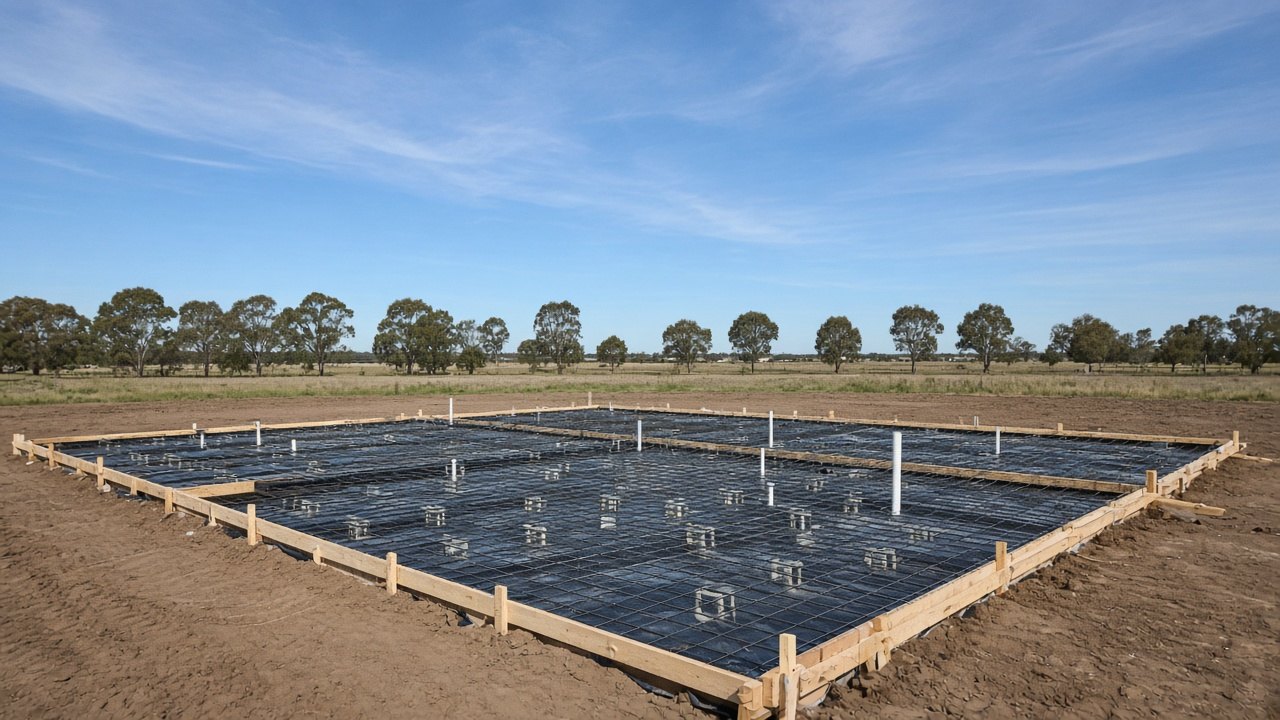
House slabs in Sale, Victoria
Engineered house, unit, extension and granny flat slabs in Sale, Victoria, poured to your engineer's design on Wellington Shire's reactive clays, with inspections coordinated before every pour.
Email: info@saleconcreting.com.au
Slabs designed for the soil
Every house slab starts with a soil report and an engineer's design. Much of Sale sits on alluvial clay that swells and shrinks with the seasons, so sites are often classed as moderately or highly reactive, and the design responds with deeper edge beams, stiffening beams, more steel or a waffle pod system. On sandy rises the design may be simpler. We build exactly to the drawings and raise questions early if anything on site does not match the report.
Who we work with
We pour slabs for builders, owner-builders, and families adding an extension, a unit at the back of a block or a granny flat. We coordinate with the plumber for under-slab drainage, the electrician for conduits, the termite installer and the building surveyor so that steel and pre-pour inspections happen on time.
Flood overlays and floor levels
Some parts of Sale and the surrounding district fall within land subject to inundation or flood overlays. In those areas council or the surveyor may set a minimum floor height, which affects fill, slab edge depth and how the site drains. We check the planning information and build to the levels on your plans.
Site preparation
We strip topsoil, cut and fill to level, compact as required by the engineer, and install pods or trench beams, vapour barrier, reinforcement and edge forms. Set-out is checked against the surveyor's marks before any concrete arrives.
Pour and curing
House slabs are poured in one continuous operation, usually with a pump. We finish to the level required for the floor coverings and cure the slab properly, protecting it from heat, wind and frost in the first critical days.
Waffle pod and raft slabs explained
A waffle pod slab sits on a grid of polystyrene void formers with reinforced ribs between them and a thickened edge beam around the outside. It uses less concrete and excavation and suits flat sites on reactive clay. A stiffened raft has deeper beams dug into the ground in a grid under the slab and suits sloping sites or more difficult soils. Your engineer chooses the system; we build either.
What we need from you
Before quoting a house slab we need the engineering drawings, the soil report, the architectural plans showing floor levels and set-out, and any planning conditions such as flood levels. If you are an owner-builder we can talk through the sequence of trades and inspections.
Plumbing and services under the slab
Sewer and stormwater drainage, water and gas lines, electrical conduits and termite collars all go in before concrete. We work with your plumber so pipes are tested and inspected, and protect penetrations through the slab during the pour.
Extensions joined to existing homes
Extensions need a new slab tied to the old house, usually with an engineered connection or articulation joint. Floor levels must line up inside, while outside levels must keep water away from both structures. Access to the back of an existing home often needs a line pump.
Units and granny flats
Small secondary dwellings and units are increasingly common on larger Sale blocks. We pour slabs for these to the engineer's design and can also pour the driveway, paths and patio around them.
Finishing for floor coverings
Slabs finished for tiles, timber, carpet or polished concrete need different tolerances. Tell us the planned floor coverings so the finish suits.
Quality checks before and after the pour
We check set-out against the surveyor's pegs, levels on the pods or beams, steel laps and cover, bar chairs and penetrations before concrete arrives, and confirm the inspection has been passed. After the pour we cure the slab and protect it from early loading.
Weather on pour day
House slabs are large and must be poured in one go, so weather planning is important. In summer we book early morning starts and have evaporation retarder and curing compound ready. In winter we avoid days with frost forecast overnight after the pour, or arrange covers. Heavy rain on pour day means rescheduling, because water on a fresh slab weakens the surface. We keep the builder informed so other trades can adjust their plans, and confirm the concrete order with the plant the afternoon before.
Build specification at a glance
| Excavation | Topsoil, wet river-flat clay, loose sand and old fill removed to firm ground; old slabs and rubble carted off |
|---|---|
| Base | Crushed rock laid in lifts and compacted, deeper where clay is soft or the block floods |
| Slab depth | Matched to the heaviest user: cars, caravans, boats, horse floats, tractors or delivery trucks |
| Reinforcement | Mesh or bar on chairs with correct cover, plus trimmer bars at corners, pits and thickened edges |
| Joints | Planned saw cuts lined up with doors and corners; isolation joints where slabs meet walls |
| Drainage | Falls to pits, grated drains, garden beds or the kerb, with edges protected from scour |
| Finish | Exposed aggregate, broom, coloured, stencil, spray pave or honed, sealed to suit heat and UV |
Sale soils, Gippsland weather and Wellington Shire rules
Sale grew on the flats where the Thomson, Latrobe and Avon systems meet the Gippsland Lakes. Close to the rivers, the wetlands and Lake Guthridge, the ground is commonly heavy alluvial clay that holds water through winter and shrinks into deep cracks in a dry summer. On the higher ground and toward Wurruk and Longford there are sandy loams that drain well but loosen when they are disturbed, and along Ninety Mile Beach at Seaspray and the lake shore at Loch Sport the ground turns to fine coastal sand. Summers here regularly push past the high thirties, frosts are common on still winter mornings, and an easterly or a hot northerly can dry a fresh slab quickly. That combination is why we dig a test hole on every job and build the base, mix and curing around what we find.
Inside your own boundary, a driveway, path or patio normally needs no permit. Anything that crosses the nature strip, footpath or kerb needs a permit for works within the road reserve from Wellington Shire Council, which looks after Sale, Maffra, Stratford, Heyfield, Rosedale, Yarram and the lakes and coast townships. Access onto the Princes Highway, the South Gippsland Highway or other arterial roads also involves the state roads authority. Land subject to inundation overlays, house slabs and larger sheds can bring in a building surveyor and an engineer. Your quote states exactly what applies.
Reading a Sale Concreting quote
Every quote we send is itemised line by line. It lists the measured square metres, breaking out and carting away any existing concrete, pavers, asphalt or gravel, the excavation depth, the type and thickness of crushed rock and how it will be compacted, slab depth, the reinforcement and its cover, the finish or stone blend, where the saw cuts go, pits, grates and stormwater work, edging and steps, the sealer, and the Wellington Shire road-reserve permit if a crossover is involved. Extras such as a line pump, a long barrow run, traffic management on the Princes Highway or York Street, or boards to protect a neighbour's lawn appear as their own items so nothing is hidden.
You will not find square-metre rates anywhere on this site. In and around Sale, the same footprint can sit on firm sandy loam in the higher streets, on wet grey river-flat clay near the Thomson and Flooding Creek, or on uncontrolled fill behind an older house, and each needs a different base. A published figure would mislead most people, so we come out, look and price what your site really needs.
House slabs and related jobs around Sale
Driveways, slabs, alfresco floors, pool surrounds, crossovers and garage floors for town blocks, lakeside cabins and farms across Wellington Shire.
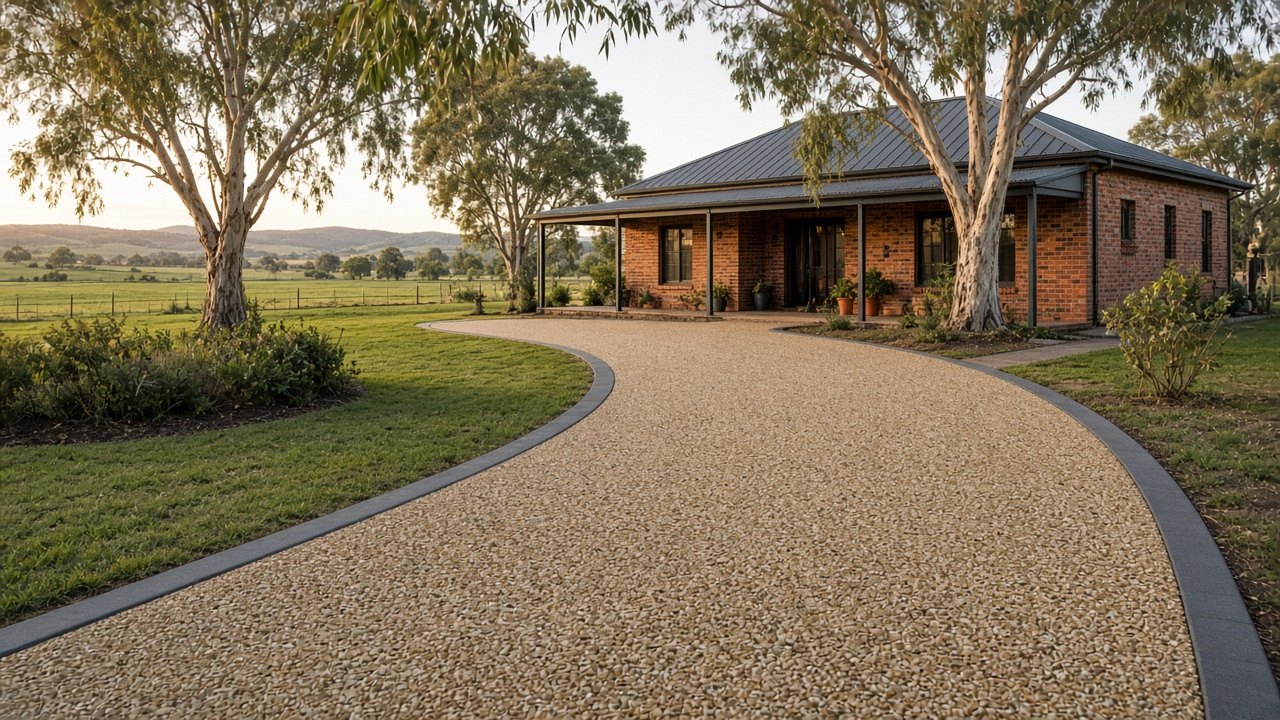
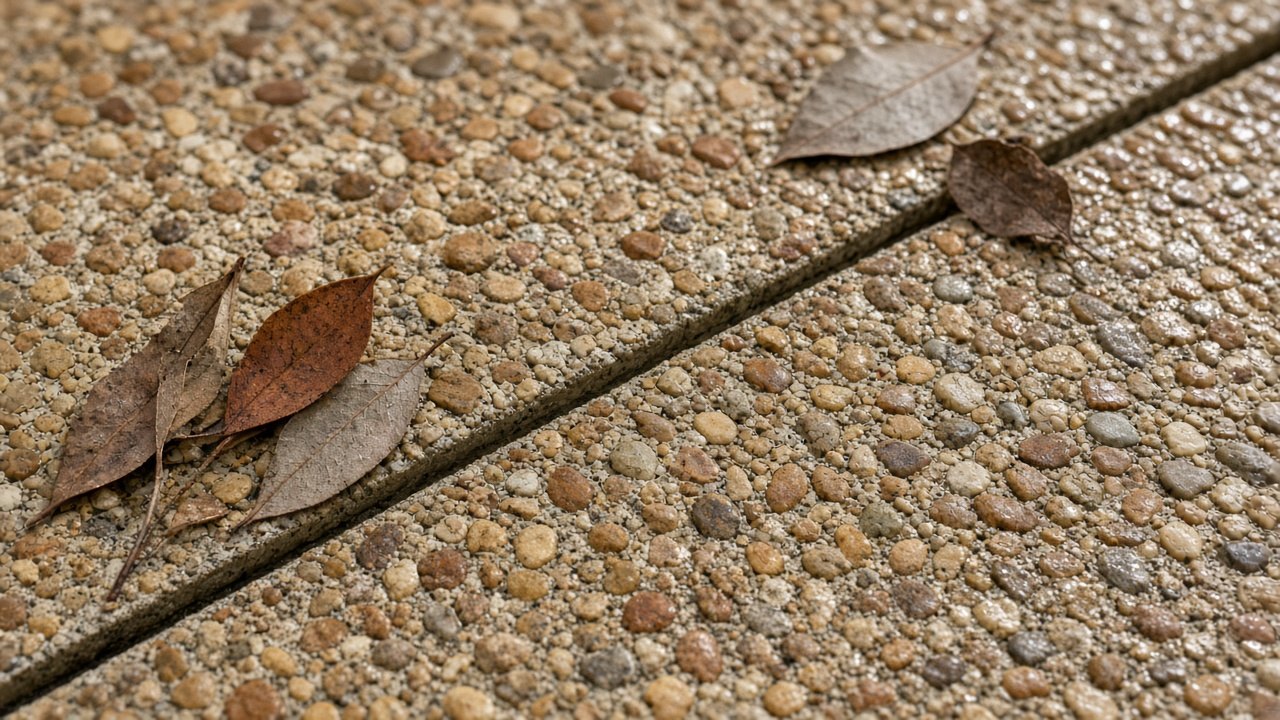
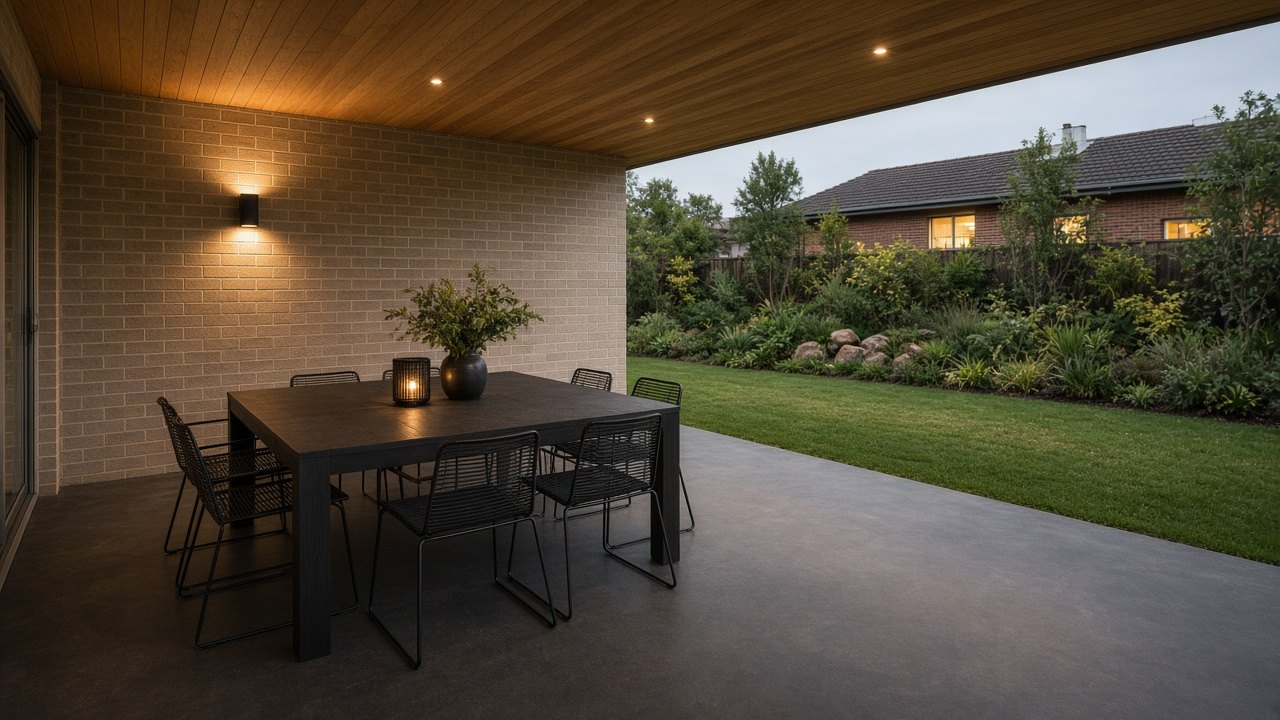
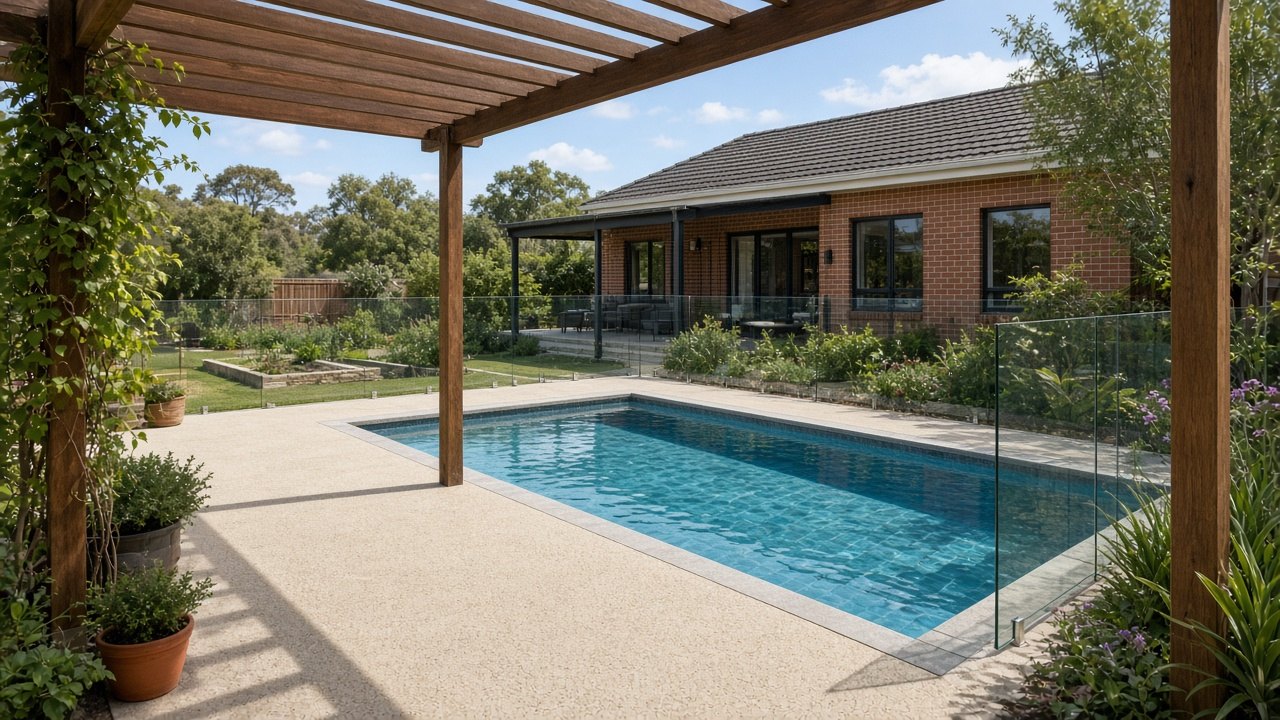
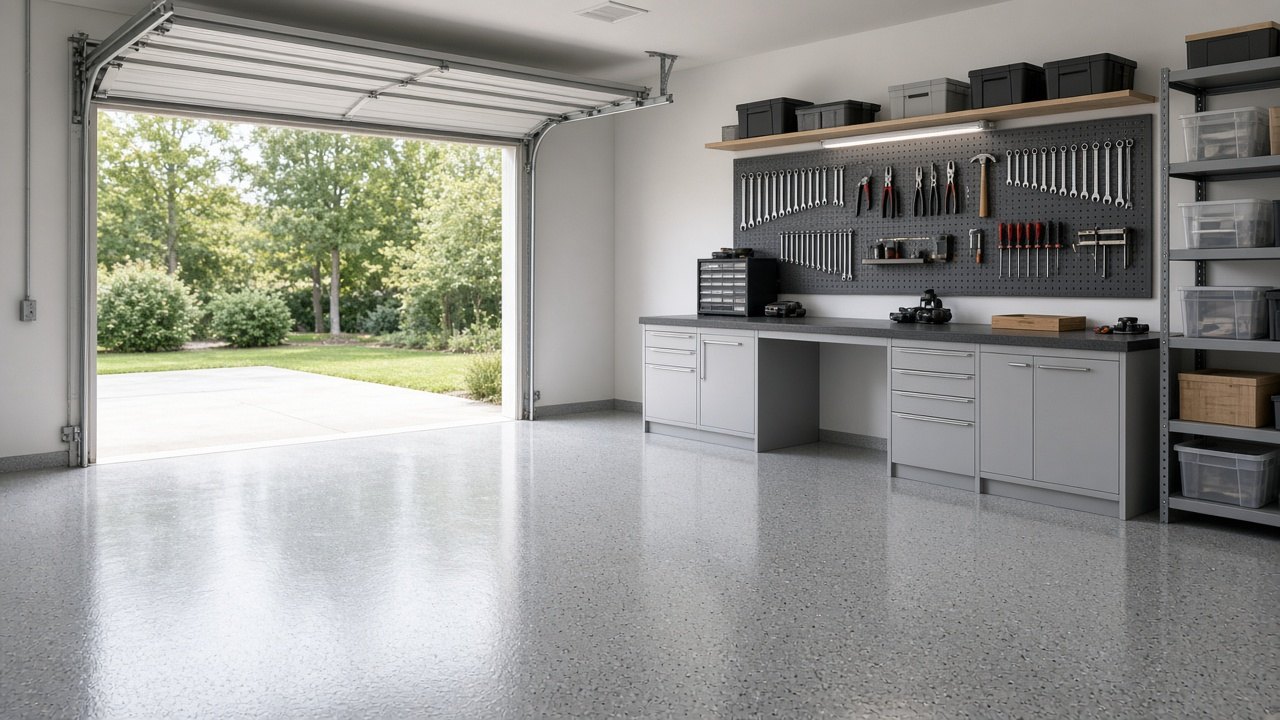
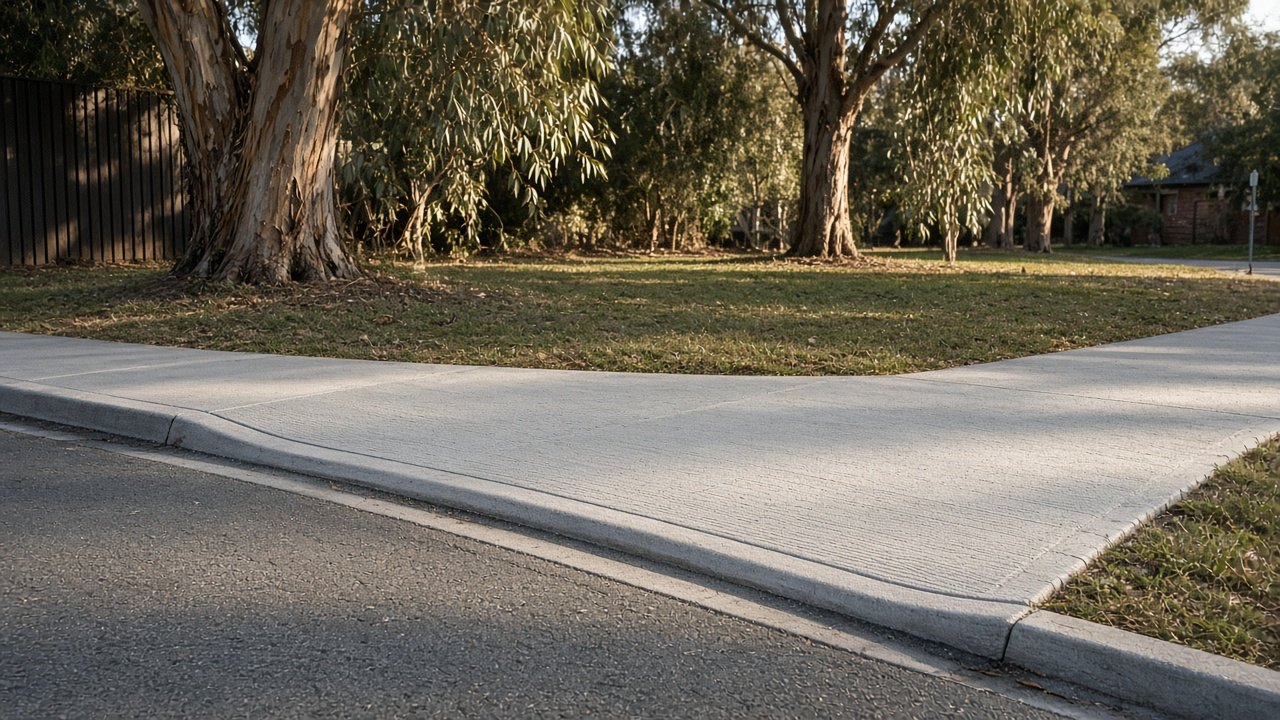
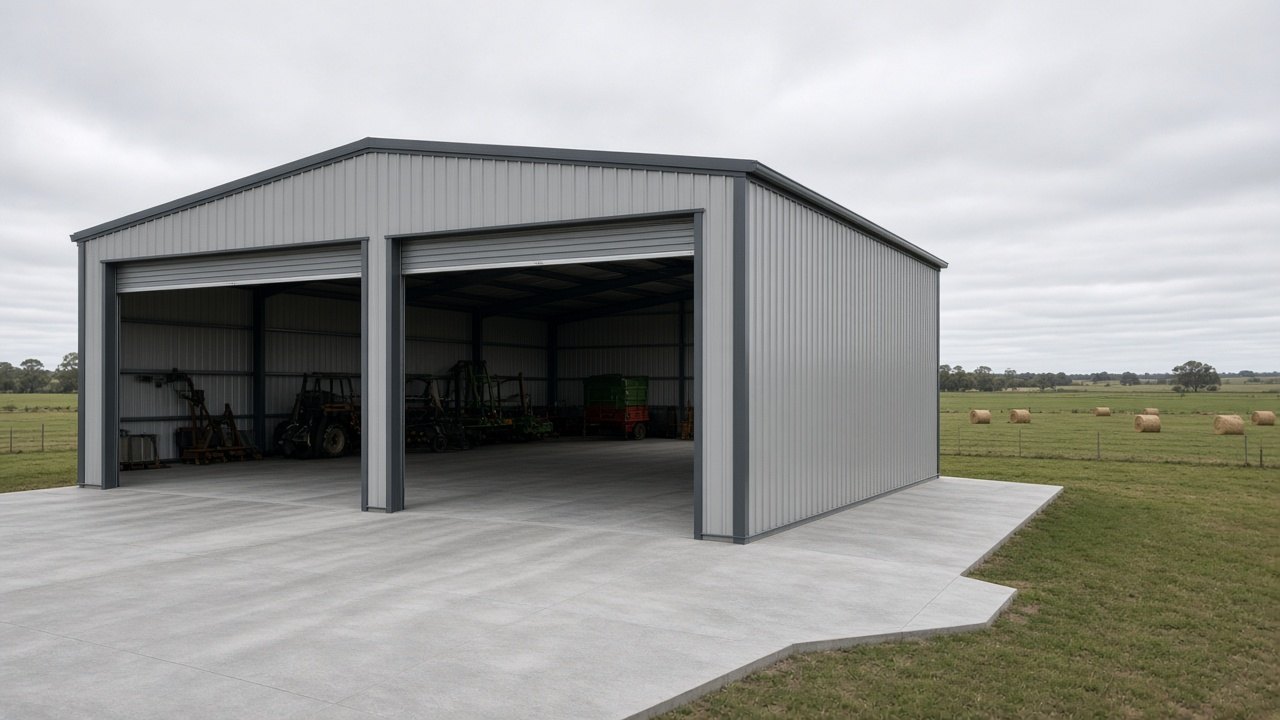
Pictures illustrate the finishes and project types we handle around Sale and Wellington Shire.
Why Wellington Shire owners choose Sale Concreting
Based in Sale 3850
From Sale we reach Maffra, Stratford, Heyfield, Longford, Rosedale and the lakes towns without losing half the day to travel.
River-flat clay understood
Alluvial clay, sandy loam and lake-shore sand each need their own base. We test the ground and build for what is there.
Written quotes, no guesses
No online rates and no figures over the phone. We visit, then email a line-by-line quote you can compare.
Made for Gippsland extremes
Mixes, curing, joints and sealers chosen for scorching summers, frosty mornings and floodwater.
From first call to finished slab in Sale
- 1
First contact
Ring, email or fill in the form with your town and a line about the job; photos of the area and the street entry save time.
- 2
On-site look
We measure, take levels, dig a test hole, check where stormwater goes and how a truck or pump will reach, and bring finish samples.
- 3
Itemised quote
You receive a written breakdown by email: excavation, rock base, slab depth, steel, finish, joints, drainage and any permit.
- 4
Groundwork
Old surfaces broken out, wet clay or loose sand removed, crushed rock placed and compacted in layers, forms and steel set and checked.
- 5
Pour
Concrete placed by chute or pump, screeded, finished to the chosen surface, then shaded or misted against heat and wind.
- 6
Finish and care
Saw cuts made, forms stripped, everything cleaned up, sealer applied where quoted, and written care notes left behind.
House slabs around Sale and Wellington Shire
Maffra 3860
Maffra is the dairy town on the Macalister River north of Sale. We pour driveways, house and shed slabs, farm hardstands and outdoor areas for town homes and irrigated farms around it.
Concreting in MaffraStratford 3862
Stratford is the Princes Highway town on the Avon River east of Sale. We pour driveways, slabs, sheds and outdoor areas for homes and rural blocks in and around Stratford.
Concreting in StratfordHeyfield 3858
Heyfield is the timber town near Lake Glenmaggie at the foot of the high country. We pour driveways, slabs, sheds and farm concrete for homes and properties around Heyfield.
Concreting in HeyfieldLongford 3851
Longford sits on the South Gippsland Highway just south of Sale. We pour driveways, house and shed slabs and rural concrete for homes and lifestyle blocks around Longford.
Concreting in LongfordRosedale 3847
Rosedale is the Princes Highway town between Sale and Traralgon. We pour driveways, slabs, patios and farm concrete for homes and properties in and around Rosedale.
Concreting in RosedaleWurruk 3850
Wurruk is Sale's western neighbour across the Thomson River, with growing estates and acreage. We pour driveways, crossovers, house slabs and outdoor areas for new and established homes.
Concreting in WurrukFulham 3851
Fulham is the rural district south-west of Sale. We pour shed slabs, driveways, house slabs and farm concrete for acreage properties around Fulham.
Concreting in FulhamSeaspray 3851
Seaspray is the beach village on Ninety Mile Beach south of Sale. We pour driveways, slabs, paths and outdoor areas for homes and holiday houses in Seaspray.
Concreting in SeasprayLoch Sport 3851
Loch Sport sits on the narrow strip between Lake Victoria and Ninety Mile Beach. We pour driveways, slabs, boat pads and paths for homes and holiday places in Loch Sport.
Concreting in Loch SportYarram 3971
Yarram is the South Gippsland Highway town near Port Albert and the Tarra Valley. We pour driveways, slabs, sheds and farm concrete for homes and farms around Yarram.
Concreting in YarramHouse Slabs questions
Do I need an engineer for a house slab?
Yes. Victorian building rules require a slab designed for the soil class and the building.
What is a waffle pod slab?
A slab built on a grid of polystyrene pods with reinforced ribs between them, common on reactive clay.
Can you pour a slab for a granny flat?
Yes, to the engineer's design and the building permit.
Who books inspections?
Usually the builder or surveyor. We make sure the slab is ready on time and attend when needed.
Areas covered
Other services
Talk to a Sale concreter
Free site visits and written quotes from Sale out to Maffra, Stratford, Heyfield and Yarram. We publish no rates, because river-flat clay, removal and access vary on every Wellington Shire job.